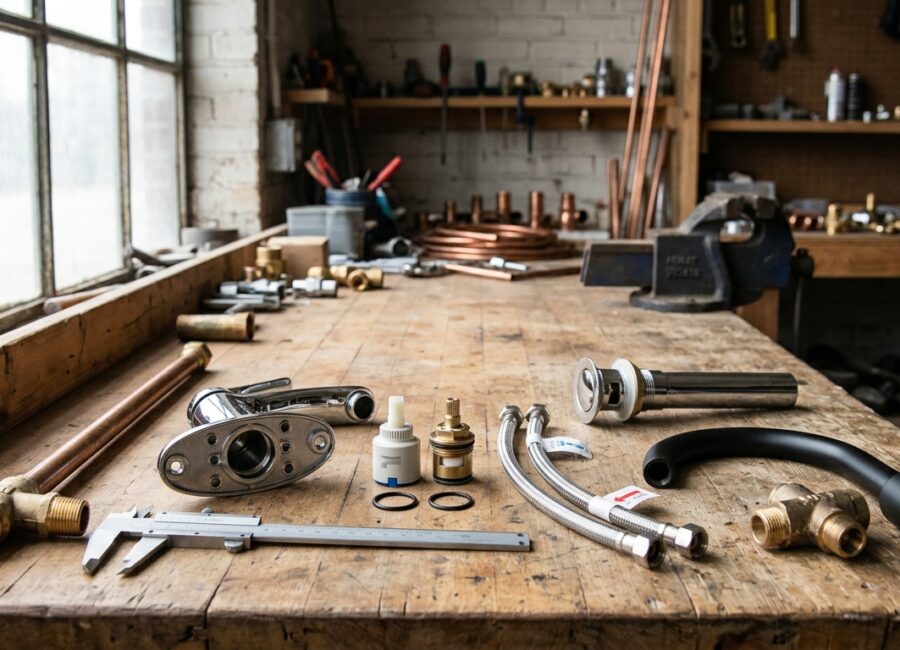

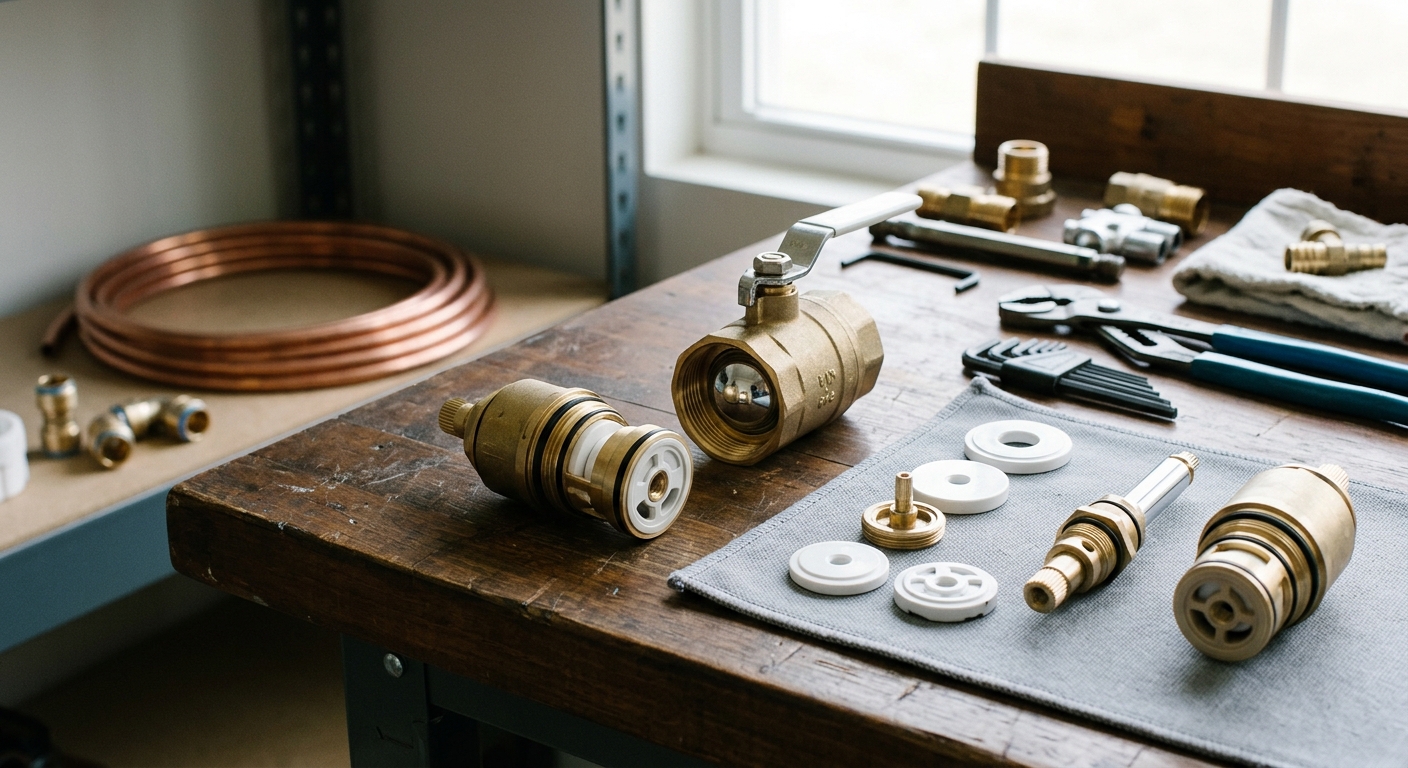
Ceramic disc cartridges and ball valves both control hot and cold mixing at the faucet, but they do it with different mechanisms, different wear patterns, and different repair costs. The disc cartridge uses two flat ceramic plates that slide against each other to meter water. The ball valve uses a single rotating slotted sphere that lines up with inlet ports. Here are seven specs you can actually check on a spec sheet or in a showroom before you decide which one goes in your bathroom.
The Selection Rule: Field-Checkable Specs Only
This list skips the usual “which is better” debate and sticks to specs you can verify yourself: turn radius you can feel with your hand, seal count you can find on a cutaway diagram, cycle ratings published by manufacturers against ASME A112.18.1, and wear patterns you can ask about at the counter. If a claim about cartridge quality can’t be checked before purchase, it’s not on this list.
Turn Radius: Quarter-Turn vs Full Sweep
Ceramic disc cartridges operate on a 90-degree quarter-turn. The handle moves a short arc from off to full flow, and that arc is consistent for the life of the cartridge because the discs don’t deform. Ball valves typically need a wider handle sweep, often 180 degrees or more, to move the sphere through its full range of mixing positions.
In a showroom, this is easy to check. Turn the handle on a disc faucet and you’ll feel it stop hard at a quarter turn. Turn a ball-valve handle and you’ll feel a longer, looser arc with more play before full shutoff. For anyone with limited hand strength or dexterity, the shorter throw on disc cartridges matters more than it sounds like it should.
Seal Count: O-Rings and Leak Risk Points
Every O-ring is a future leak point. Ball valves rely on a rotating slotted sphere seated against spring-loaded rubber seats, and most designs use anywhere from two to four O-rings plus the seats themselves to manage the inlet and outlet ports. Disc cartridges seal with the flat faces of the ceramic plates pressed together, so the primary seal isn’t an O-ring at all. Most disc cartridges still use one or two O-rings at the inlet ports and the stem, but that’s a smaller count than a typical ball assembly.
Fewer seals doesn’t mean zero maintenance. It means fewer rubber components that can hardens, crack, or compress over time. When you’re comparing cutaway diagrams at a supplier counter, count the black rubber parts. That number is a rough proxy for how many things can eventually weep water.
Quick Comparison
| Spec | Ceramic Disc | Ball Valve |
|---|---|---|
| Handle turn radius | 90 degrees (quarter-turn) | 180 degrees or more |
| Primary seal mechanism | Flat ceramic plate contact | Rubber seats against sphere |
| Typical O-ring count | 1 to 2 | 2 to 4 plus spring seats |
| Published cycle rating | Often near 500,000 cycles | Varies more by manufacturer |
| Moving parts | Two stationary-feeling plates, one rotates | One rotating sphere with multiple ports |
Cycle Rating: Lab Tests Before Failure
ASME A112.18.1 is the standard most US faucet manufacturers test against, and it includes a cycle test that opens and closes the valve repeatedly to simulate years of use. Ceramic disc cartridges commonly carry published cycle ratings near 500,000 operations before failure in lab conditions. That number isn’t a lifespan guarantee for your specific faucet, since real-world wear depends on water hardness, installation quality, and how hard someone cranks the handle, but it’s a verifiable lab figure you can ask a manufacturer to confirm.
Ball valve cycle ratings vary more by manufacturer and design, partly because the moving parts and seal materials differ more across brands than ceramic disc designs do. When you’re comparing spec sheets, ask for the actual ASME A112.18.1 test result rather than accepting a general durability claim. If a manufacturer can’t point to a number, that’s useful information too.
Mineral Scoring: Hard Water Wear Patterns
Hard water leaves mineral deposits on any metal or rubber surface it touches, but the failure mode differs between the two cartridge types. Ball valves can suffer scoring on the sphere itself as mineral grit works its way between the ball and the rubber seats, which eventually causes the handle to feel gritty or the valve to leak at the base. Ceramic disc plates are harder than the rubber seats in a ball valve, and the flat sliding contact is more resistant to scoring from mineral particles, though plates can still get coated with scale in very hard water, which shows up as a stiffer handle feel over time.
If your water supply tests above roughly 7 grains per gallon, ask the counter staff specifically whether the disc or ball option in front of you has been tested or warrantied for hard water service. Not every spec sheet lists this, but the better manufacturers will have an answer rather than a shrug.
Repair Math: Cartridge Swap vs Valve Replacement
When a ceramic disc cartridge fails, the repair is almost always a straight swap: shut off the supply, pull the handle and retaining nut, lift out the old cartridge, drop in the new one. Parts are widely stocked because disc cartridges are a common replacement item, and the job rarely requires anything beyond a few hand tools.
Ball valve repairs can be more involved depending on design. Some ball assemblies use a full cartridge-style replacement similar to a disc, but others require replacing the ball, the springs, the seats, and the O-rings as separate small parts, which means more pieces to keep track of and more chances to miss one during reassembly. Before you buy, ask whether replacement parts are sold as a single cartridge unit or as a kit of loose components. That answer tells you how the next repair will go.
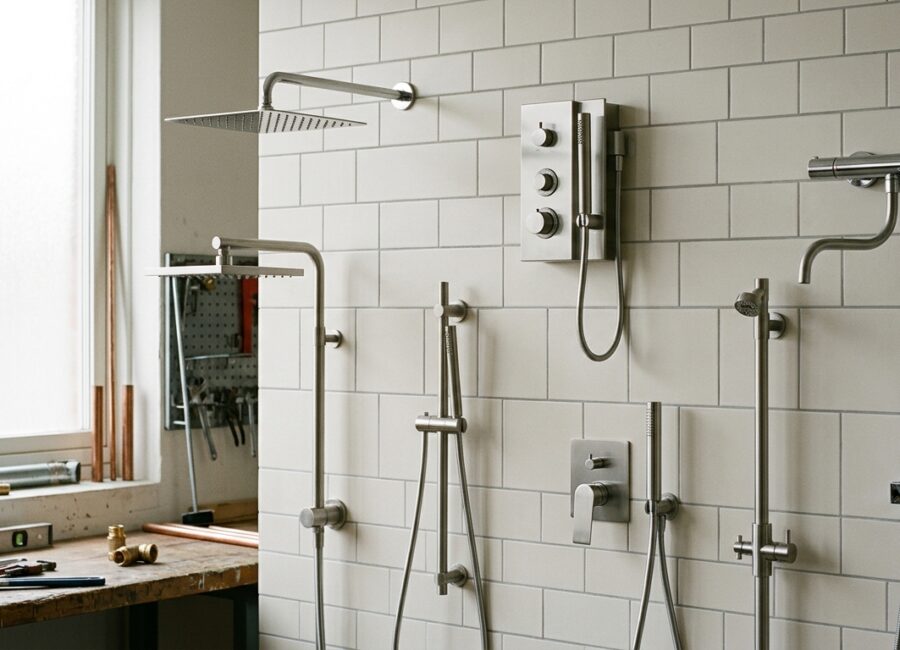
This same logic applies beyond the faucet at the sink. If you’re speccing a shower, the valve body behind the wall controls mixing and diverting, and the trim you see is just the visible half of the assembly. When you’re shopping shower faucet sets, ask whether the trim uses the same cartridge family as the valve body, because mismatched generations are a common reason people can’t find replacement parts five years later.
What to Check Before You Buy
- Ask for the ASME A112.18.1 cycle rating in writing, not just a verbal claim of durability.
- Turn the display handle yourself and confirm whether it’s a quarter-turn or a longer sweep.
- Request a cutaway diagram or ask the counter staff to count O-rings and seats.
- Ask whether replacement parts come as a single cartridge or a multi-piece kit.
- If your home has hard water, ask specifically about mineral wear testing or warranty terms related to scale.
None of these checks require special tools or plumbing experience, just a few direct questions at the counter or in the spec sheet. If a supplier can’t answer them, that’s a sign to call a plumber who installs both types regularly and can speak to real failure rates in your local water conditions.